
Elizabethan Fairies in A Midsummer Night's Dream (GCSE English)
If you picture fairies as glittering, benevolent creatures like Tinkerbell in Peter Pan, you are looking at A Midsummer Night’s Dream through a modern lens. To understand the real tension, danger, and deep dramatic irony in Shakespeare’s colourful romantic comedy, we have to look at the magical characters through Elizabethan eyes.
In the 1590s, fairies weren't seen as whimsical figures from bedtime stories; for many, they were genuine sources of fear, superstition, and explanation for inexplicable and often tragic phenomena. They were blamed for illnesses, sudden misfortune, ruined food, infant mortality (the belief in "changelings"), and even lost harvests—making them forces of chaos and destruction, not just cheeky mischief!
In this blog, a Shakespeare specialist and expert tutor breaks down what the Elizabethans actually believed about these ancient spirits. By examining contemporary folklore, political allegory, and even the devastating weather of the period, we will reveal how Shakespeare deliberately invoked these deep-seated fears to thrill, scare, and ultimately, conquer his audience with the most sophisticated fairy world ever shown on the English stage. By understanding this fascinating context, you can deepen your analysis and gain extra AO3 marks in your GCSE English Literature exam.
The Royal Connection: Spenser & The Faerie Queene
We can't talk about Elizabethan fairies without mentioning Edmund Spenser. Just a few years before A Midsummer Night's Dream was performed, Spenser published his epic poem, The Faerie Queene (1590). In Spenser’s poem, the "Faerie Queene" (named Gloriana) was a direct allegory for Queen Elizabeth I. Spenser presented the fairy world not as a place of demons or scary folklore, but as a place of high virtue, royalty, and order. In his introduction to the poem, Spenser explicitly stated his intention to flatter the Queen:
"In that Faery Queene I meane glory in my generall intention, but in my particular I conceive the most excellent and glorious person of our soveraine the Queene." — Edmund Spenser, Letter to Raleigh (1590)
Shakespeare knew he had to tread carefully. He couldn't make Titania too similar to Queen Elizabeth, because Titania falls in love with a donkey and fights with her husband! That would have been treasonous mockery. Instead, Shakespeare separates the two. He includes a specific compliment to the real Queen Elizabeth (whom he calls the "imperial votaress") and keeps her distinct from Titania.
Oberon: "But I might see young Cupid's fiery shaft / Quench'd in the chaste beams of the watery moon, / And the imperial votaress passed on, / In maiden meditation, fancy-free." (Act 2, Scene 1)
This moment is Shakespeare saying to the audience: "I know Spenser calls Elizabeth the Fairy Queen, but in my play, the real Queen is separate from this chaos." It shows Shakespeare engaging with the literature and politics of his time. Remember that censorship in Elizabethan England was tightly controlled by the Master of the Revels, who had the authority to approve, alter, or ban plays before they were performed. The government used this system to prevent criticism of the Crown, limit religious controversy, and ensure that theatre supported social and political stability. Shakespeare wanted to ensure that his depiction of the fairy queen met these standards and was not banned by the Master of Revels. This is a crucial piece of context to remember in your GCSE English Literature exam, whichever play you are studying.
The Fear of Robin Goodfellow
Today, we view Puck as a mischievous but ultimately harmless character. However, his alternate name, Robin Goodfellow, carried specific baggage in Elizabethan folklore. He was a "Hobgoblin"—a domestic spirit who could be helpful if treated well, or malicious if offended. In 1584, a writer named Reginald Scot published The Discovery of Witchcraft. He listed the creatures that terrified people at the time, noting that servants were taught from childhood to fear:
"...spirits, witches, urchins, elves, hags, fairies... [and] Robin Goodfellow."
Shakespeare uses this reputation immediately. When the Fairy meets Puck, they identify him not as a cute spirit, but as a known troublemaker:
Fairy: "Are not you he / That frights the maidens of the villagery; / Skim milk, and sometimes labour in the quern / And bootless make the breathless housewife churn?" (Act 2, Scene 1)
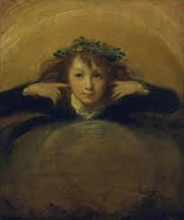
A Victorian portrait of Tom Hayley as Robin Goodfellow by George Romney
When analysing Puck in your GCSE exam, it is essential to highlight how Shakespeare softens this character compared to his frightening folkloric origins. By giving Puck the position of Oberon’s servant and primary agent, Shakespeare effectively puts a leash on the chaos. Puck is mischievous—he is the "shrewd and knavish sprite" whose blunders propel the central comic action—but he is consistently shown acting under command, seeking only to please his master.
Crucially, Puck is not fundamentally evil or demonic, unlike the creatures described in contemporary books like Reginald Scot’s The Discovery of Witchcraft. He revels in confusion ("Lord, what fools these mortals be!"), but his actions are motivated by playfulness- not malice, and he is the one who ultimately cleans up the mess. This domestication of the terrifying Robin Goodfellow ensures that, despite the chaos he unleashes, the play remains safely within the bounds of a lighthearted romantic comedy, reinforcing the overall message that all the strange events were "no more yielding but a dream."
The Danger of "Changelings"
One of the central conflicts of the play is the custody battle between Oberon and Titania over the "Little Indian Boy." To a modern audience, this seems like a simple argument. To an Elizabethan audience, this referenced a dark reality. It was a common belief that fairies would steal beautiful human children and replace them with "changelings"—deformed, sickly, or elderly fairies left in the crib. This superstition was often used to explain tragic medical conditions. If a healthy baby suddenly became sick or failed to grow, parents might believe their real child had been taken by fairies.
Puck: "She never had so sweet a changeling; / And jealous Oberon would have the child / Knight of his train, to trace the forests wild." (Act 2, Scene 1)
Shakespeare subverts the trope here. Usually, the "changeling" is the ugly thing left behind. Here, the boy is the prize.
Fairies as Forces of Nature
For the Elizabethan audience, the fairies were far more than just poetic figures; they were elemental spirits whose well-being was inextricably tied to the health and fertility of the land. They didn't see tiny humans with wings; they saw powerful, ancient entities capable of wielding nature itself. If the Fairy King and Queen were unhappy or in conflict, the immediate, real-world consequence was that the land would suffer, causing widespread misery and potentially famine for humans.
This was not a theoretical fear in the 1590s. England had suffered through a series of devastating climate events—often referred to as the "Little Ice Age"—which brought bad harvests, endless rain, and cold, disastrous summers. This environmental instability led to rising grain prices and genuine hardship for the common people.
When the audience heard Titania speak in Act 2, Scene 1, they would have recognised their own recent weather catastrophes in her lament. Shakespeare masterfully uses the literary device of the pathetic fallacy—where nature reflects human (or fairy) emotions—to explain the meteorological and agricultural disaster:
Titania: "Therefore the winds, piping to us in vain, / As in revenge, have suck'd up from the sea / Contagious fogs; which falling in the land / Hath every petty river made so proud / That they have drowned their banks..."
She explicitly links the disruption in their fairy marriage to the bad weather plaguing the human world:
Titania: "The ox hath therefore stretch'd his yoke in vain, / The ploughman lost his sweat, and the green corn / Hath rotted ere its youth attain'd a beard..." (Act 2, Scene 1)
This passage does more than set a scene; it serves as a terrifying indictment of the ruling fairy class. Their petty squabble over the changeling boy has caused a national catastrophe for the human world. This makes the fairy conflict highly consequential and deeply resonant with an Elizabethan audience who were literally struggling to survive the effects of bad weather and failing crops.
Shakespeare's Innovation: Making Them Tiny
While the Elizabethan audience was primed to fear fairies as powerful, human-sized monsters capable of destroying crops and stealing children, Shakespeare did something revolutionary: he made them diminutive. This choice was not just decorative; it was a profound shift in folklore that served both a theatrical and social purpose.
In earlier medieval and Elizabethan folklore, fairies, such as the infamous Robin Goodfellow, were often the size of humans or small children, which made them genuinely threatening. Shakespeare consciously deviated from this tradition. He emphasised their smallness through richly poetic imagery, confining their immense power within tiny borders.
Size and Setting: His fairies hide in acorn cups, fashion their garments from bat wings, and war with common insects like bumblebees. Titania’s detailed instructions to her attendants—"Feed him with apricocks and dewberries, / With purple grapes, green figs, and mulberries..."—underscore their need for tiny, natural sustenance.
Literary Echoes: This focus on the miniature is echoed in his later work, The Tempest, with the sprite Ariel: "In a cowslip's bell I lie..."
By making them tiny, Shakespeare achieved a crucial dramatic effect: he tamed the terror. The aristocratic audience could now regard the fairy court not as a genuine threat to their eternal souls or physical safety, but as a source of whimsical and poetic amusement. The miniature scale turns the fairies from powerful, pagan demons into beautiful, albeit still dangerous, creatures of fantasy.
In essence, Shakespeare "invented" the modern flower fairy, moving the creatures of folklore away from the terrifying Hobgoblin tradition and towards the aesthetic, ornamental figures we recognise today. This transformation allowed him to safely inject powerful social and political commentary (like the dispute between Oberon and Titania over the changeling) without risking the accusation of presenting demonic forces on stage.
Conclusion: From Terrors to Exam Success
Shakespeare’s genius lies in taking terrifying Elizabethan folklore—the crop-destroying elemental spirit, the changeling, and the malevolent hobgoblin (Robin Goodfellow)—and taming them through the beauty of comedy and verse. This transformation was crucial. To achieve the highest grades, you must demonstrate a perceptive understanding of the play’s historical context (AO3). Don't just analyse what the fairies do; analyse what they represented to the 1590s audience.
The Fear of Catastrophe: Discuss how Titania’s speech about rotten harvests and floods directly reflects the very real climate and famine anxieties of Elizabethan England, making the fairy conflict highly serious. Use Titania's description of the destructive weather as evidence.
Controlling Chaos: Explain that making Puck Oberon’s servant (taming the powerful folkloric "Robin Goodfellow") and making the fairies tiny were deliberate choices to render the chaos manageable and safe for a courtly audience.
Political Context: Reference the distinction between Titania and the "imperial votaress" (Queen Elizabeth I) to show how Shakespeare navigated the political necessity of flattery and referred to the work of Edmund Spenser.
By grounding your analysis in this tension—between genuine Elizabethan fear and the play's eventual comic resolution—you demonstrate a sophisticated understanding of context, securing higher marks in your GCSE English Literature exam.
